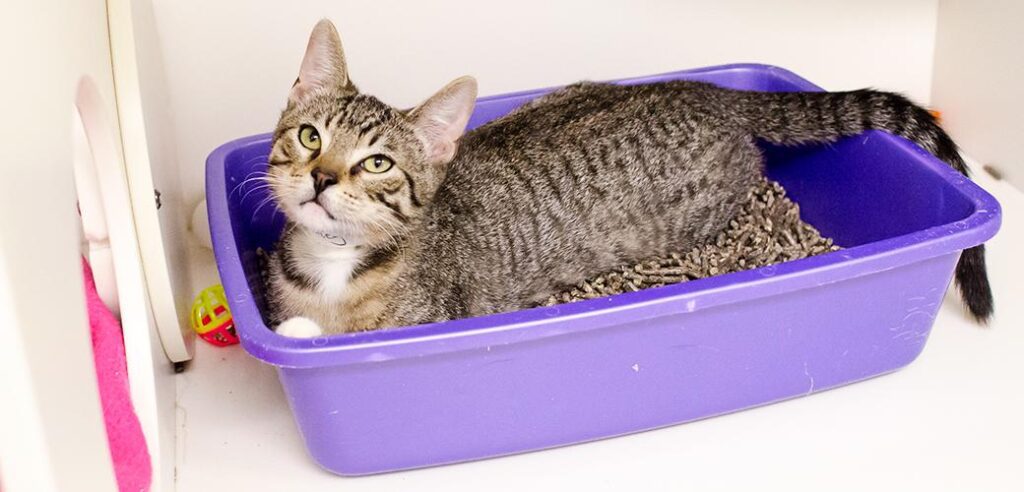
When Twilight first came to me as a tiny newborn, she had no idea what a litter box was. Teaching her how to use it became part of our daily routine — gentle guidance, patience, and plenty of praise along the way. It wasn’t always smooth sailing, but watching her finally trot over and use her litter box properly felt like a small victory.
Here’s a step-by-step guide to help get your cat’s litter box routine back on track.
1️⃣ Rule Out Medical Issues First if your cat won’t use the litter box
If your cat suddenly stops using the litter box, your first step should always be to check for health problems.
See your vet if you notice:
-
Straining or crying while using the box
-
Urinating in tiny dribbles
-
Frequent accidents or blood in the urine
⚠️ Conditions like urinary tract infections, bladder stones, or arthritis can make it painful for cats to use the litter box.
2️⃣ Keep the Box Clean & Cat-Friendly
Cats are incredibly clean creatures. If the litter box isn’t spotless, your cat won’t use the litter box — it’s that simple.
-
It’s clean → Scoop at least once a day, wash weekly
-
There’s enough → One box per cat, plus one extra
-
It’s private → Quiet, low-traffic area away from food bowls and noisy appliances
-
It’s comfortable → Many cats prefer shallow, open boxes with unscented clumping litter
3️⃣ Discover Your Cat’s Preferences
Cats can be picky about textures and smells. If your cat won’t use the litter box, try experimenting with different litter types:
-
Try different litter textures (clay, paper, corn, or silica) to see what they like best.
-
If they always use the same wrong spot, put a box there temporarily—then gradually move it to a better location.
4️⃣ Reduce Stress & Avoid Punishment
Cats are creatures of habit, and stress can trigger bathroom mishaps.
- Major changes (moving house, new pets, furniture rearranging) can unsettle them.
- In multi-cat homes, provide separate litter boxes and safe spaces for each cat.
- Never punish accidents—it only increases anxiety. Instead, reward proper litter box use with praise or treats.
5️⃣ Retrain with Patience & Rewards
For kittens or nervous cats:
- Place them in the litter box after meals or naps
- Offer praise or a treat when they use it correctly
- If they were spooked near the box, move it somewhere quieter and rebuild positive associations
6️⃣Provide Enough Boxes (and the Right Size!)
The golden rule: one litter box per cat, plus one extra. So, if you have two cats, you need three boxes.
If your cat won’t use the litter box, it might simply be because they don’t like sharing or feel there aren’t enough clean options. Make sure boxes are large enough for your cat to turn around comfortably — and remove lids if your cat seems reluctant to enter enclosed spaces.
🐾 Extra Tips for Tricky Cases
- For large cats or messy diggers, use a big storage tub as a litter box
- Place a mat outside to catch litter
- Use furniture-style enclosures to hide boxes while blending with décor
✅ Quick Checklist
✔️ Vet check to rule out illness
✔️ Keep boxes clean and accessible
✔️ One box per cat, plus one extra
✔️ Match litter type to your cat’s preference
✔️ Reduce stress in the home
✔️ Retrain with patience and positive reinforcement
🐾 My Cat Bathroom Setup
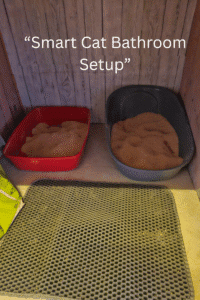
In my home, I created a dedicated “cat bathroom” under the stairs. It has a wipeable floor with a litter mat to catch stray bits, two trays to give my cats choice, and breathable doors for airflow while keeping the space discreet. I even added a sensor light — because contrary to popular belief, cats can’t actually see in total darkness. This setup keeps the area hygienic, private, and cat-friendly, which makes my cats far more likely to actually use their trays..

🐾 Twilight’s Final Meow
“Human, I’m not fussy… I’m just particular. Give me a clean box, a quiet corner, and litter I love—or I’ll pick my own bathroom spot.”