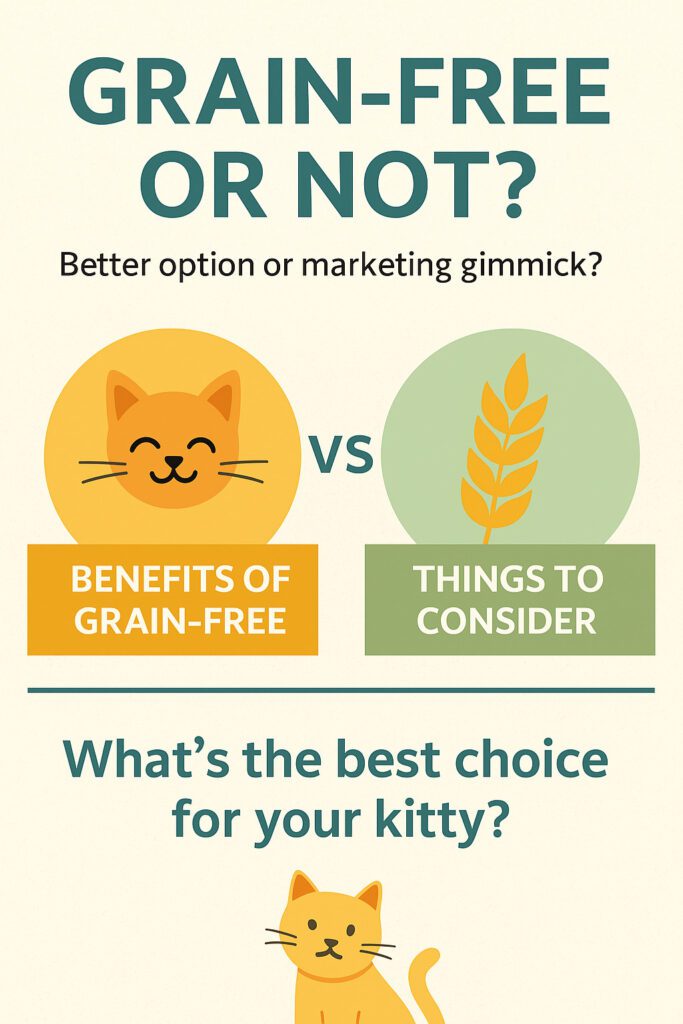
Grain free cat food has become one of the biggest trends in the feline world. From glossy adverts promising “ancestral diets” to bags featuring prowling wildcats, it’s easy to believe grain-free is the ultimate upgrade for your kitty. But is it really healthier — or just clever marketing with a shiny label?
Today we’re scratching beneath the surface to uncover the truth about grain-free diets: what they actually are, when they can help, and when they might cause more harm than good. Grab your coffee (or catnip tea), and let’s get into the kibble of it all!
Why Grain Free Cat Food Has Everyone Talking
“In our house, Snowflake eats raw rabbit and Twilight has tinned cooked rabbit — so grain-free kibble isn’t part of their routine. But since so many cat parents do feed kibble, I wanted to dive into the facts about grain-free food. If you’re curious whether it’s worth switching, here’s what you need to know.”
Potential Benefits of Grain Free Cat Food:
- 🐾 Easier on sensitive tummies: Some cats with allergies or food sensitivities may digest grain-free food more comfortably.
- 🐾 Protein power: Grain-free options are often higher in meat-based proteins, which help keep your cat’s muscles strong and lean.
- 🐾 Shiny coat, happy cat: Some owners report improved skin and coat health when grains are removed from the diet.
- 🐾 Weight management: Fewer fillers can sometimes mean fewer empty calories.
Further reading here: VCA animal hospitals “Alternative Diets: Does My Cat Require a Special Food?”
🐱 Why Grain Free Cat Food Has Everyone Talking
Cats are obligate carnivores, meaning they need meat to survive — so the idea of removing grains sounds logical. After all, wild cats don’t munch on rice or wheat, right? That’s the argument many brands make when promoting grain free cat food as a more “natural” option.
“In our house, Snowflake eats raw rabbit and Twilight prefers tinned rabbit — so grain-free kibble isn’t part of their daily routine. But since so many cat parents do rely on kibble, I wanted to find out: is grain-free really better?”
Grain-free foods typically replace wheat, corn, or rice with other carbohydrates like peas, lentils, or potatoes. While that sounds simple enough, not all replacements are created equal — and that’s where the debate begins.
⚠️ Things to Keep in Mind Before You Switch
Before you toss out your current kibble, there are a few things to consider — because grain-free cat food isn’t automatically the right choice for every feline.
✅ Talk to your vet first. Grain-free diets were once linked to certain heart issues (dilated cardiomyopathy, or DCM) in dogs, and while cats aren’t as affected, it’s always worth discussing with your vet.
✅ Read the label carefully. “Grain-free” doesn’t always mean healthier. Some formulas replace grains with starchy fillers like potatoes or peas, which can raise carbohydrate levels.
✅ Avoid marketing traps. Cats in the wild might not eat rice, but they also don’t eat chickpeas or lentils! Focus on meat-first formulas, not just trendy labels.
✅ Monitor your cat’s reaction. Watch for changes in energy, weight, or digestion over a few weeks. Cats are individuals — what works for one might not work for another.
✅ Don’t panic about grains. Healthy grains like rice or barley can be part of a balanced diet. Many cats thrive on regular food that includes them.
🐾 Choosing the Right Grain Free Cat Food
If you decide to give grain-free a go, here’s how to pick a high-quality one your cat will actually benefit from:
- Check the protein source — Chicken, turkey, salmon, or rabbit should be top of the list.
- Skip artificial additives — Avoid anything with artificial colors or “meat flavoring.”
- Look for balanced formulas — Taurine, Omega-3s, and vitamins are essential.
- Start gradually — Mix new food in slowly over 7–10 days to prevent tummy upset.
- Stick to portion sizes — Grain-free foods can be calorie-dense, so measure carefully.
🐈 A Whiskernest Story: When Twilight Tried Grain-Free
When I tested a grain free cat diet for Twilight, she was suspicious at first (as cats usually are). After a few cautious sniffs, she eventually approved — for about three days. Then she returned to giving me the “nice try, human” stare and went back to her favorite rabbit tin.
Snowflake, on the other hand, was far more diplomatic. He tried both versions, then sat by the cupboard, clearly voting for both. Typical Snowflake logic. 😹
The Bottom Line
“For some cats, grain free cat food may help with sensitivities or digestion, but it’s not a guaranteed miracle. Since Snowflake and Twilight are on very different diets (raw and cooked meat), I’ve learned the most important thing is tailoring food to each cat’s needs — not following trends. Whether your cat thrives on a balanced kibble, a grain free cat food, or a special diet, the goal is always the same: keeping them healthy, happy, and purring.”
🐾 About the Author

Denise Shafto – Cat enthusiast & founder of Whiskernest
Denise shares cozy tips, practical guides, and cat-approved finds to help whiskered friends live their best nine lives. When she’s not writing, she’s usually testing new toys with her own mischievous felines.
🐾 WhiskerNest Cat Picks
Our favorite finds for happy, healthy cats — chosen by Snowflake & Twilight! 😺